So my old Audio preamplifier I built over 10 years ago needed a bit of work. I’ve been having issues with noise on some input sources, usually high frequency whining & humming. I’ve been trying to isolate earth loops for a while, but with mixed success. As a last ditch attempt, I decided to convert the preamp to run on a DC input (12 or 24V), this way I wouldn’t need an earth wire to the chassis (essential on a 230V device)
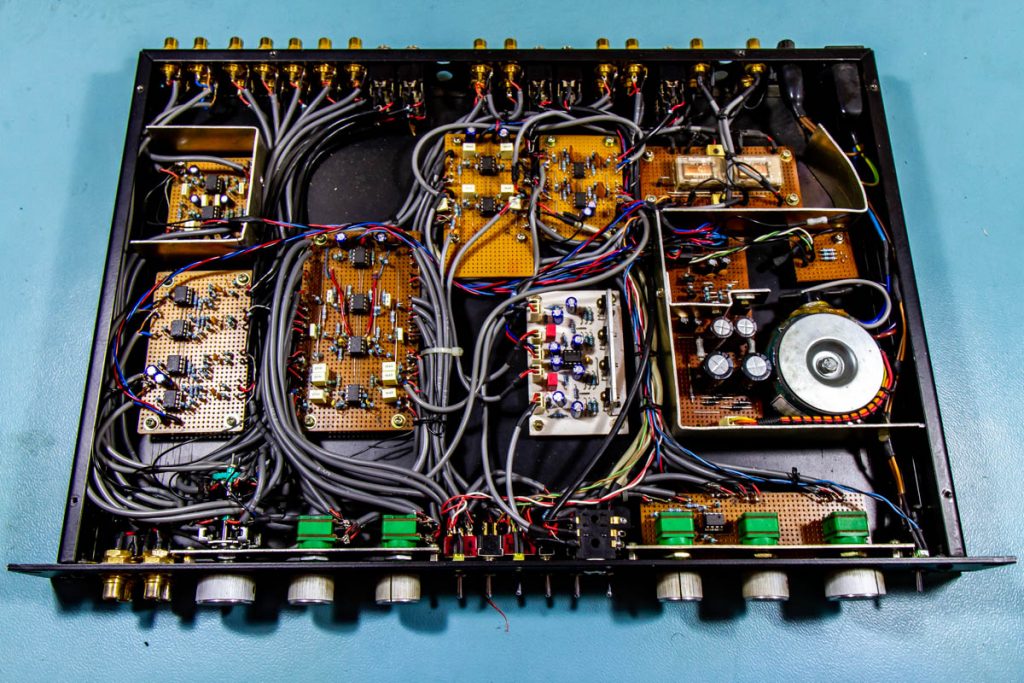
Before removing the old power supply, I did a few measurements, to see what the power consumption was. The dual 15V rails had a load of 140mA each, and another 27mA on the 12V aux rail (used for the output relays and front panel LEDs) This totals 4.5W after the power supply. Measuring the 230V input, I recorded 9W, meaning the power supply is 50% efficient. Not exactly good, but unsurprising for a transformer supply with linear regulators.
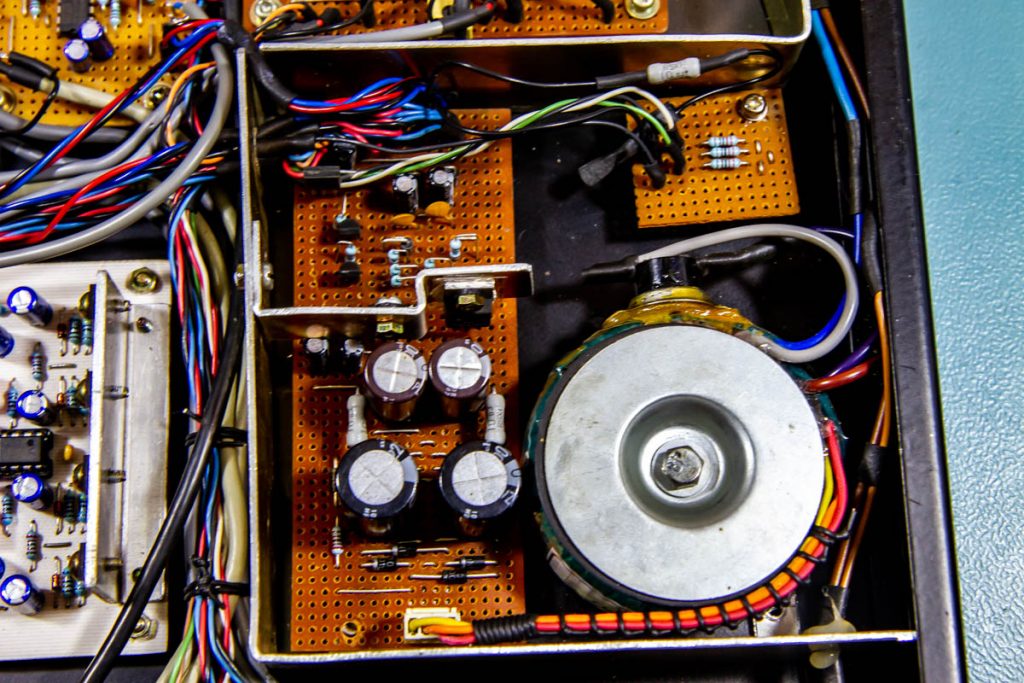
So I started making a new power supply, using some wide input DC-DC converter modules, with additional filtering on the output to reduce the noise further.
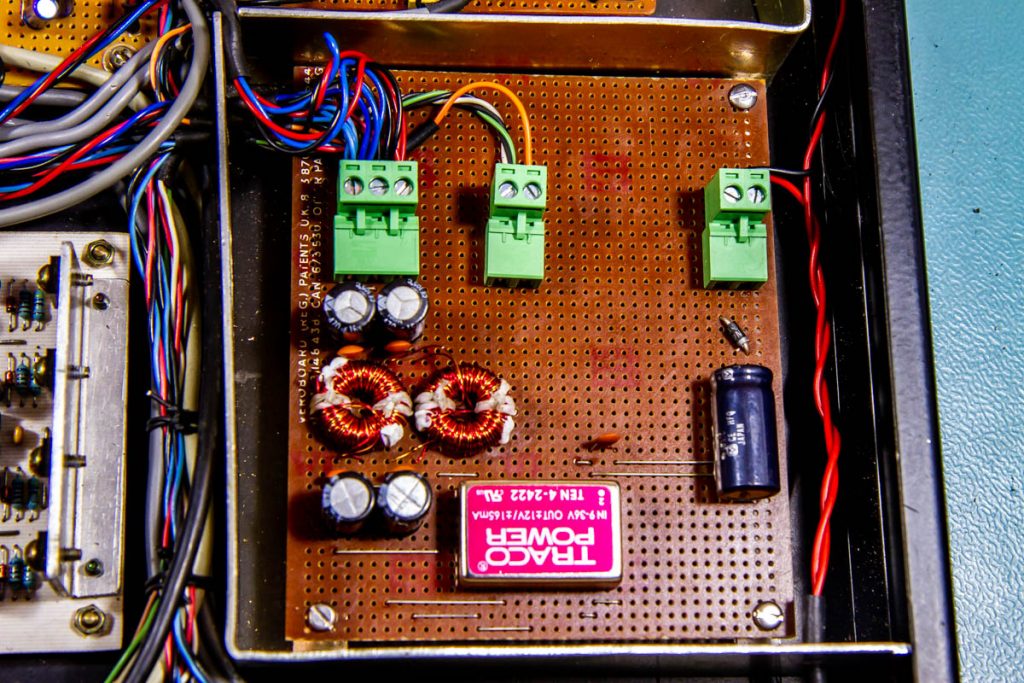
After fitting the power supply (this time it is +/-12V, which will reduce the power consumption slightly), I measured 134mA per supply, plus 19mA for the aux rail (reduced by increasing the resistors on the LEDs, which in turn reduces the LED current). This totalled 3.44W total, so a slight improvement here. However the total input power consumed is 4.28W, giving an efficiency of 80%.
This also means I can run the preamp directly on the solar system batteries, rather than having to use an inverter (which also has it’s conversion losses)
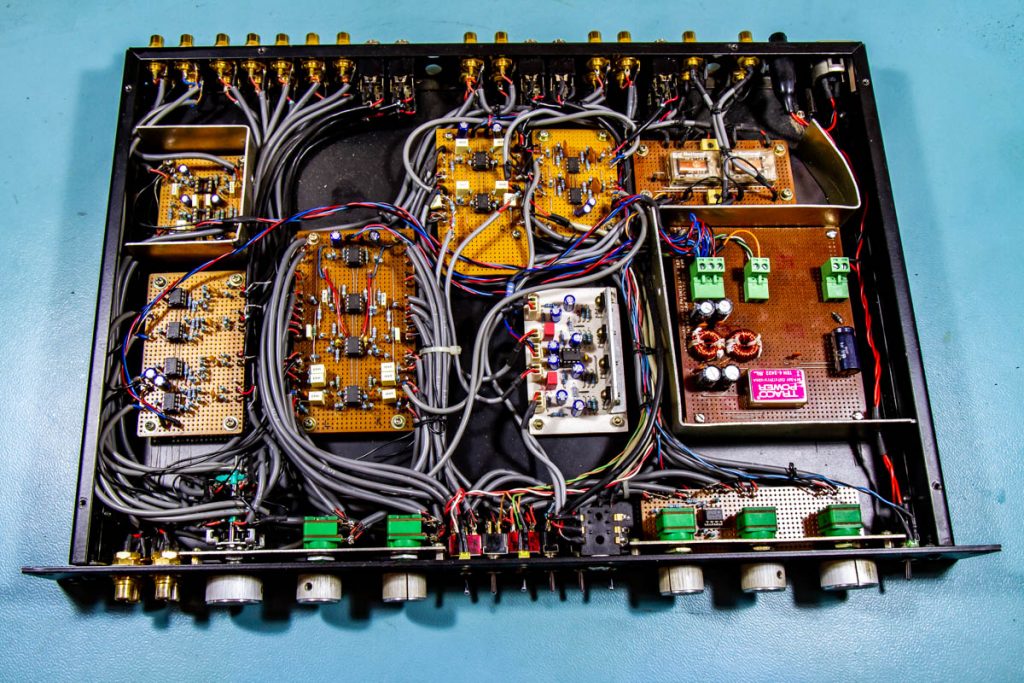
During testing my noise issue had not got any better, in fact it was much worse on some inputs. Isolating the source by unplugging everything revealed that the noise was being caused by the input cabling, longer wires giving more noise. After some investigation with an oscilloscope, it turned out that the input amplifiers were unstable, and oscillating. A couple of low value capacitors cured this, so now it is fully working at last.
As this preamplifier is at least 10 years old, and built with parts available ten years ago, there are now better opamps out there. I have identified a replacement for 15 of the 16 opamps, giving similar performance at less than 20% of the power consumption. I’m going to order some, and report back. Stay tuned for part 2!